.svg)

.png)
Get treament for alcohol, opioids, stimulants, and more in Iowa
✅ Weekly group therapy to help you stay on track.
✅ Medication when appropriate
✅ Covered by most insurance & Medicaid
★★★★★ Over 500+ 5-Star Reviews




.png)








Treatment for a full range of substance use disorders
- Alcohol
- Opioids
- Stimulants (methamphetmine, cocaine)
- Cannabis use disorder
- Tobacco use disorder
How Treatment at Groups Works


Built for real life — not short-term fixes
The right mix of tools, based on evidence.
- Alcohol: medications that reduce cravings
- Opioids: Suboxone or Naltrexone
- Stimulants & cannabis: therapy-first approach
* Larochelle, M. R., Bernson, D., Land, T., Stopka, T. J., Wang, N., Xuan, Z., ... & Walley, A. Y. (2020). Medication for opioid use disorder after nonfatal opioid overdose and association with mortality: A cohort study. Addiction, 115(3), 598-607. https://doi.org/10.1111/add.14991

Fast, affordable care — from home
- Available statewide
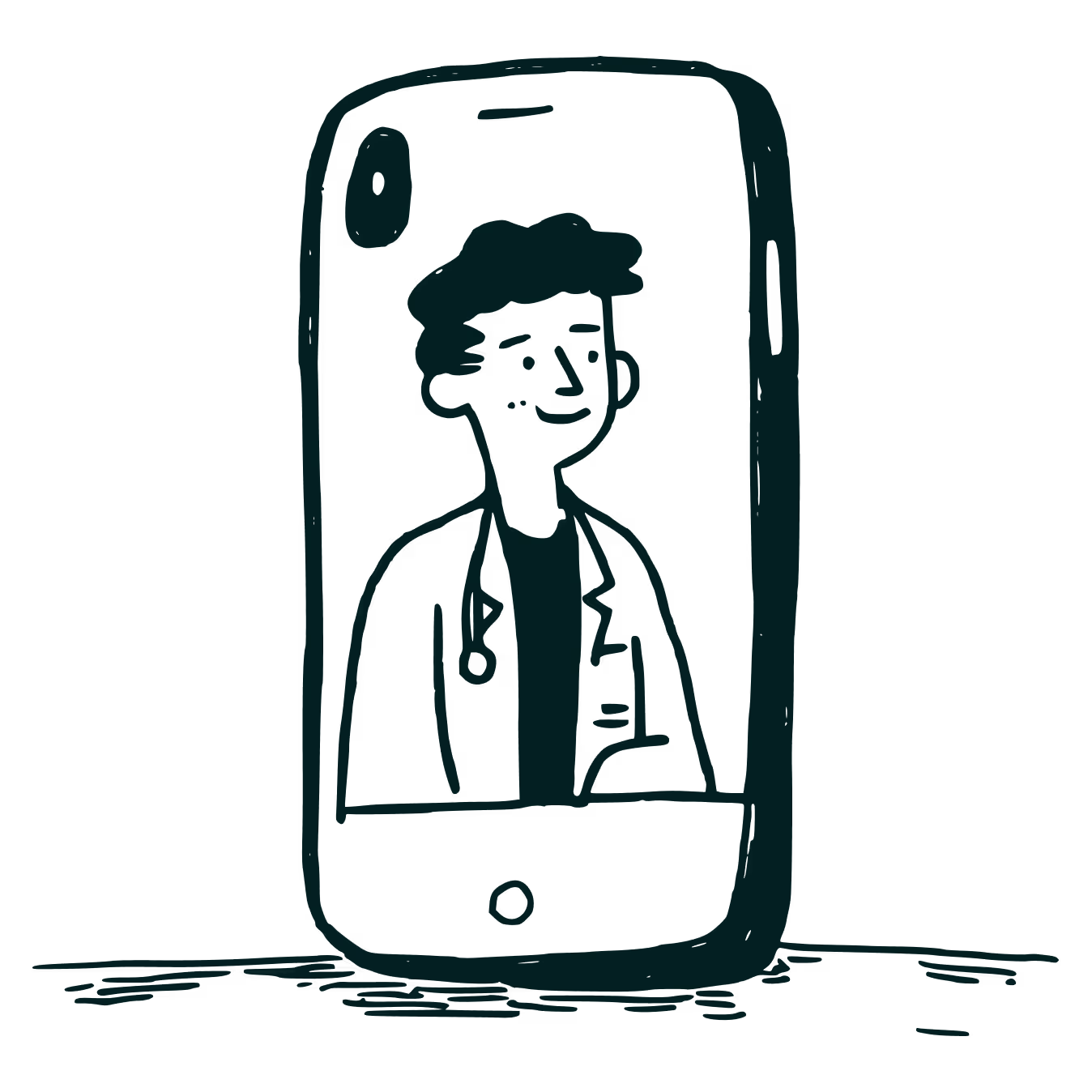
- Virtual appointments by phone or video
- No long clinic waits
- Covered by most insurance including Medicaid and Medicare
RX Only: See important safety information about Suboxone.

Real people, real stories, real recovery.

The office manager of Kristi's office, says "She's just amazing. The things she has been through, and then she's still willing to put herself out there to help others. That's my favorite thing about her.

Our members deserve to be heard. And we love having the opportunity to give them a platform to tell their amazing stories.

"At Groups, you're not just a number. You're actually part of a team."

“The biggest change I’ve had in my 5 years at Groups has been the love and respect and worth I have found in myself”.
Making the call may
feel like the hardest part.
But it can change everything.

You have questions, we have answers
Groups providers may prescribe medication as part of treatment when it’s clinically appropriate. Medication is commonly used for opioid and alcohol use disorders, while therapy and behavioral support are the primary treatments for other substance use disorders. All treatment plans are personalized based on individual needs. For example: When treating Opioid Use Disorder, most members are prescribed Suboxone. Suboxone helps with withdrawal symptoms and cravings.
We accept many Medicaid, Medicare, and commercial insurance plans.
- Aetna
- BCBS
- Cigna
- Humana
- Medicaid
- Medicare
- United Healthcare
- Wellpoint
- And many more
If you’re uninsured, we accept self-pay, and you may have access to state grant programs. Please call us at (888) 858-1723 to discuss your options. Making treatment affordable for you is our priority.
Both! We offer in-person support at our local offices or online using the Groups app. Whatever works best for you and your needs.
You’ll meet with a licensed counselor or Recovery Consultant who will ask questions about your health history. This helps us make sure our program is right for you. This will most likely be done virtually.
Next, you’ll meet with a physician (also virtually) to go over any medical issues that could impact treatment. If you’re right for our treatment, they'll prescribe the right dose of medication to prevent cravings. If Groups isn’t the right fit, we’ll refer you to other treatment options.
Yes. Members complete weekly urine screens as part of treatment. The results are confidential between you and your care team. Suboxone is a highly regulated medication. Many states require treatment to include drug screens.
Drug tests also provide valuable information about treatment progress. Groups doesn’t punish members for positive drug screens. Instead, we work with members to help them stay safe and prevent or reduce opioid use.
Suboxone (buprenorphine/naloxone) is indicated for the treatment of opioid dependence in adults. Suboxone should not be taken by individuals who have been shown to be hypersensitive to buprenorphine or naloxone as serious adverse reactions, including anaphylactic shock, have been reported. Taking Suboxone (buprenorphine/naloxone) with other opioid medicines, benzodiazepines, alcohol, or other central nervous system depressants can cause breathing problems that can lead to coma and death.
Other side effects may include headaches, nausea, vomiting, constipation, insomnia, pain, increased sweating, sleepiness, dizziness, coordination problems, physical dependence or abuse, and liver problems. For more information about Suboxone (buprenorphine/naloxone) see Suboxone.com, the full Prescribing Information, and Medication Guide, or talk to your healthcare provider.
You are encouraged to report negative side effects of drugs to the FDA. Visit www.fda.gov/medwatch or call 1-800-FDA-1088.

Talk to a real person

Not ready? Keep in touch